-
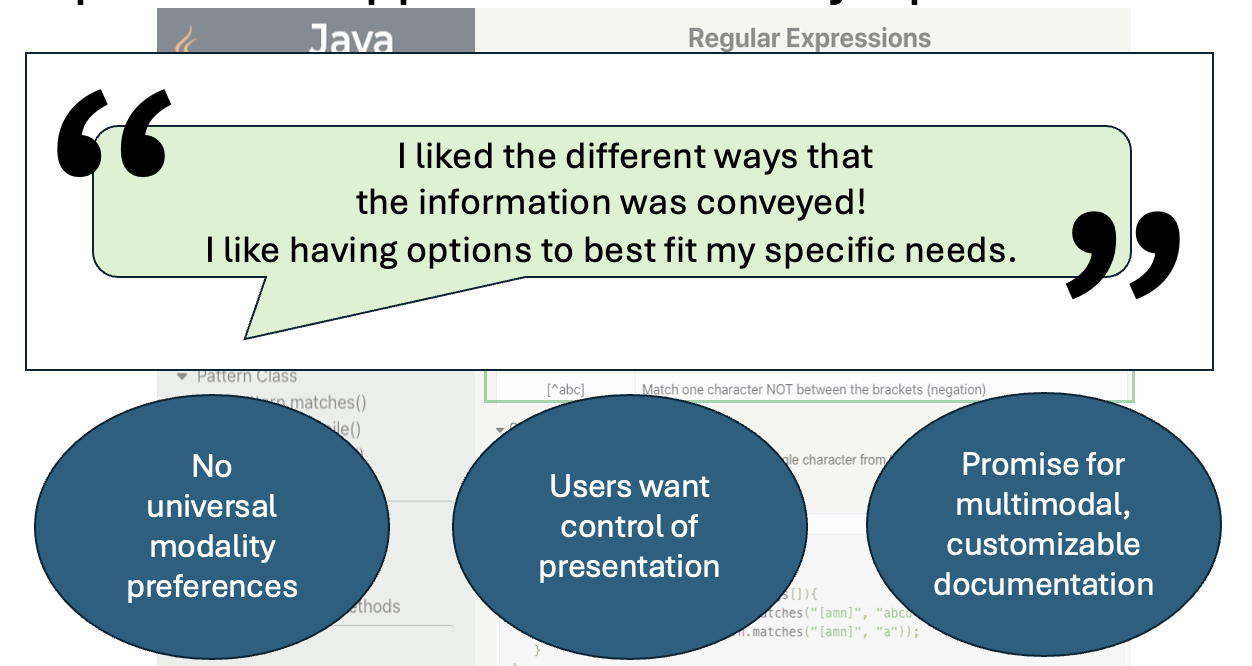
Multimodal Documentation
To support programmers in identifying pertinent information catered to their presentation preferences, we developed a prototype tutorial with five modalities, or information presentation formats. From a survey study with 56 respondents, we confirm that although text content is most useful for solving conceptual tasks, code examples support deeper comprehension of the underlying concepts. We report that respondents' contradicting preferences for the modalities suggest the need to have multiple alternatives in a software learning resource. -
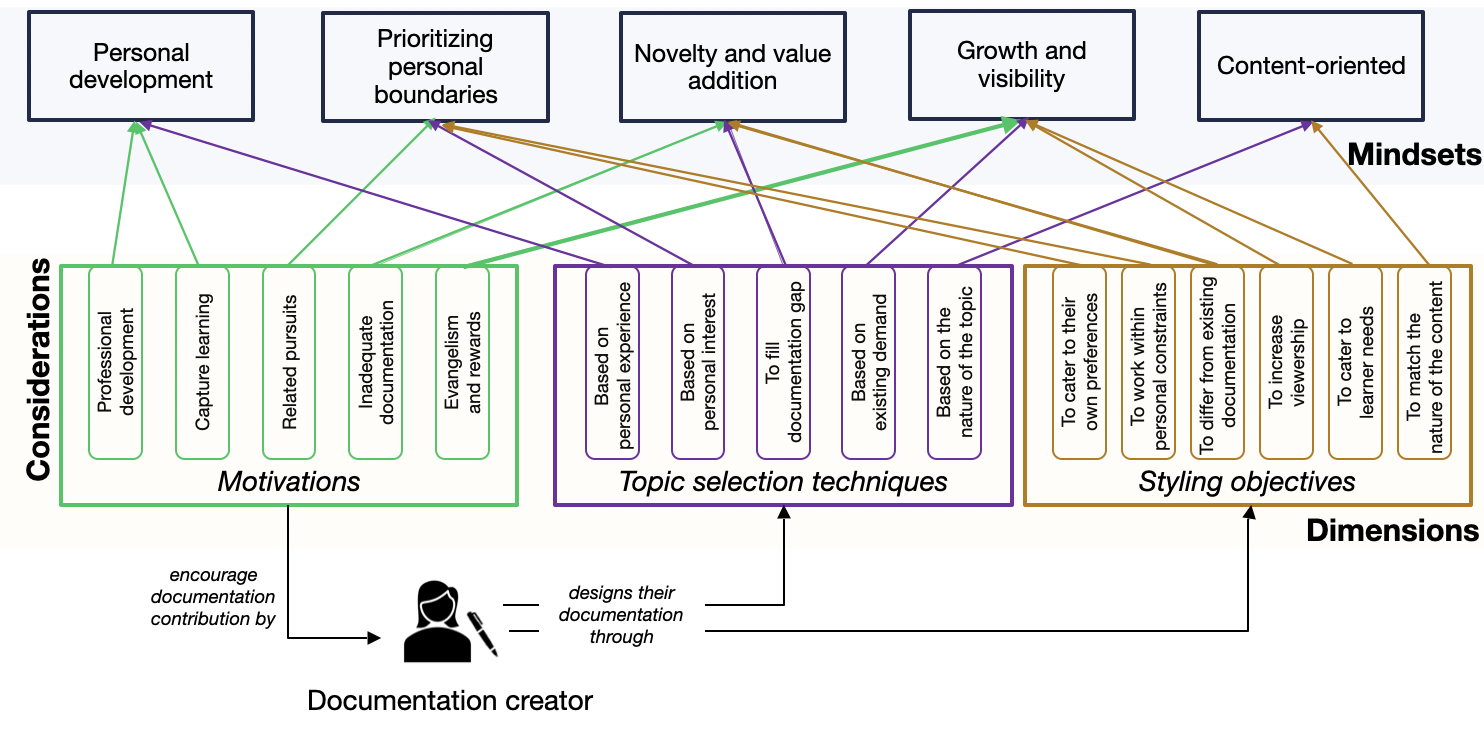
Documentor Mindsets
We studied why and how people voluntarily share learning resources for software technologies online. Our interviews with 26 documentors revealed that people prioritize different aspects, for example they share resources to build their own digital portfolio, and so focus on documenting what they know, rather than based on what audiences are looking to learn. We grouped 16 such considerations that we identified, based on their underlying concepts to identify five mindsets in the documentation contribution process. Our framework of mindsets and their considerations inform information seeking and the design of documentation creation tools about the context in which documentation was contributed. -
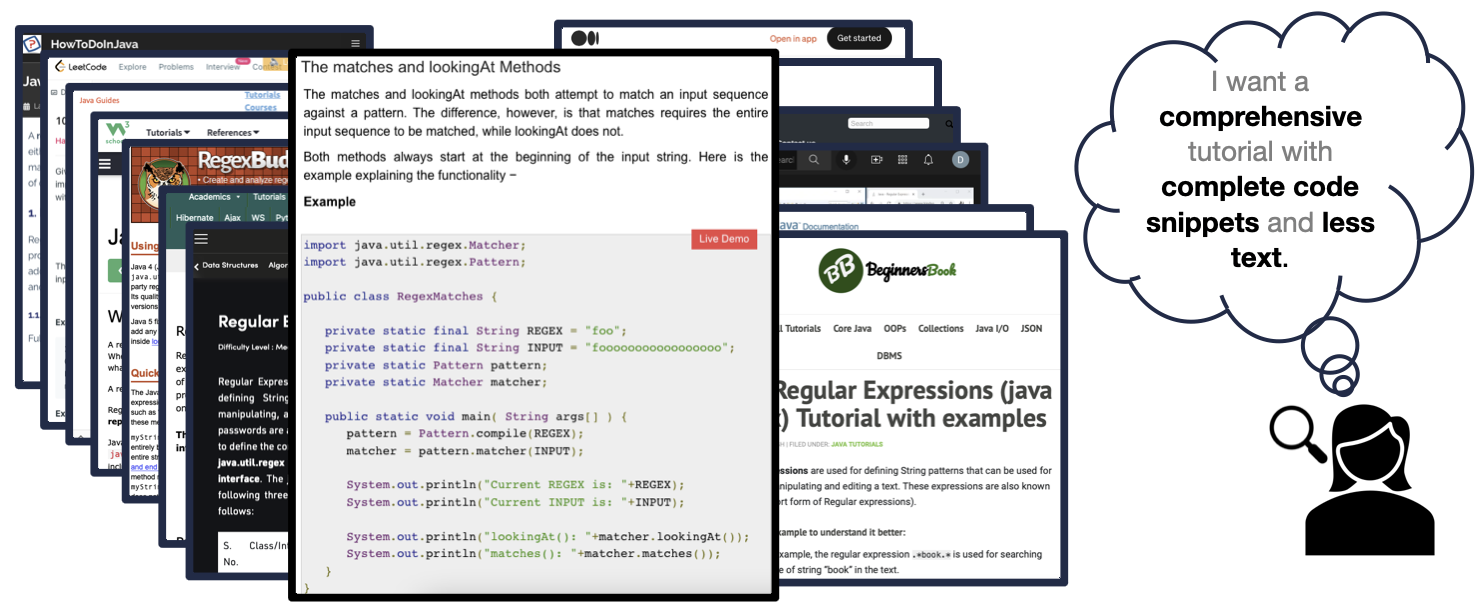
Tutorial Styles
Without a common definition for what is a "tutorial", understanding how to systematically and automatically design and create such resources is challenging. We studied the properties of tutorials in the current software documentation landscape for five popular programming languages. We developed a framework for characterizing resources based on their distinguishing attributes, i.e. properties that vary widely for the resource, relative to other resources. We proposed that a resource can be represented by its "resource style", i.e. the combination of its distinguishing attributes, and show three techniques for characterizing resources based on our framework. Our framework provides a means to reason about the design of online software learning resources. -
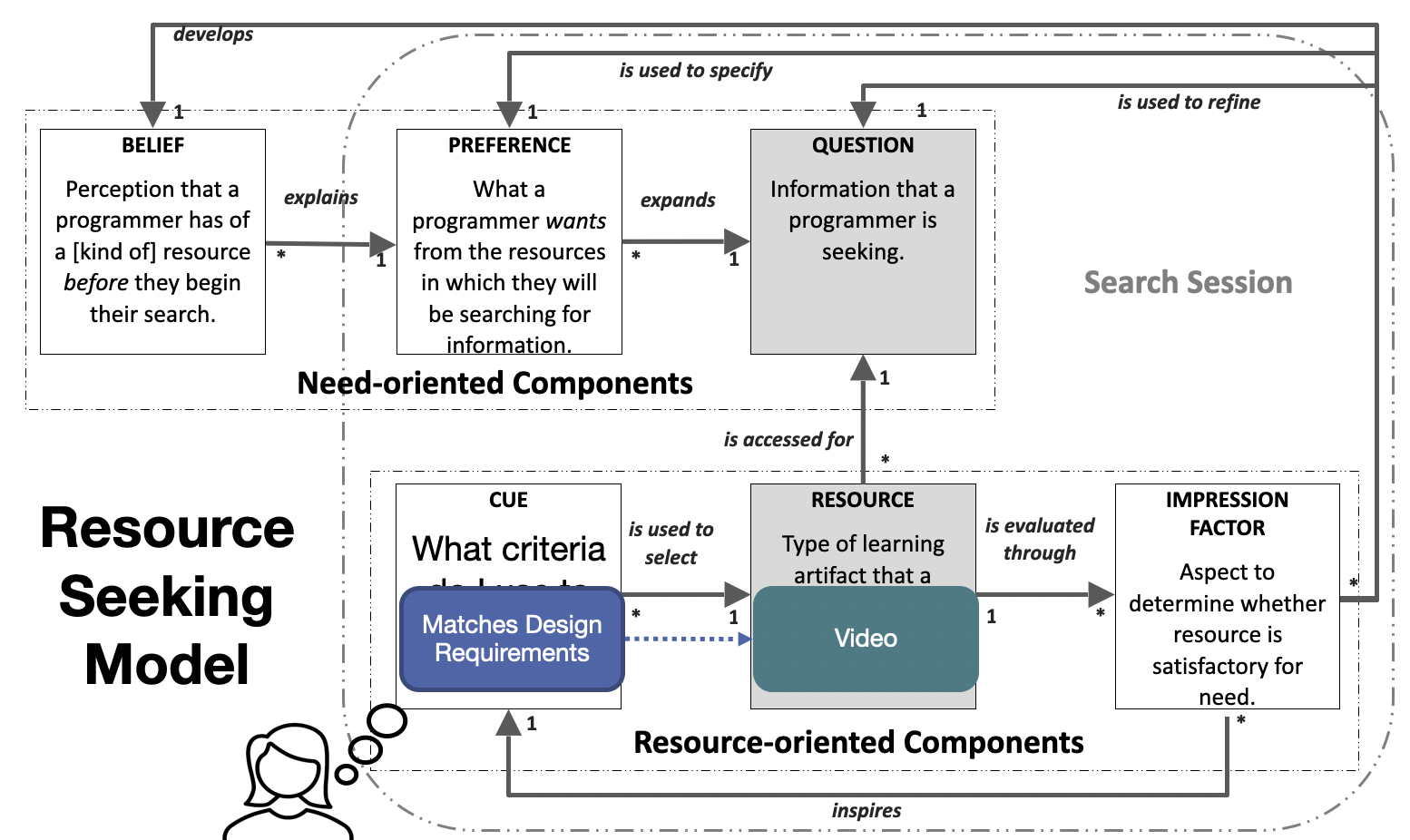
Finding Learning Resources
With numerous online resources to choose from, it is important that technology creators and researchers understand how people search for relevant information online and what they are looking for. We conducted a diary and interview study where we asked ten participants to list, in detail, the steps they took and why while searching for information about a technology online, over a period of five days. Our observations show that people have developed beliefs about different resources, have preferences for what they are looking for, and use cues to navigate to resources that are pertinent to their context. We proposed a Resource Seeking Model based on our observations that has important implications for the creation of resources and search tools.